The indigenous cultures of La Guajira are unique due to the convergence of two worlds: the guardians of the Sierra Nevada (Kogui, Arhuaco, Wiwa, and Kankuamo) and the Wayuu people of the desert. This duality between the sacred mountains and the coastal sands creates a spiritual and ancestral richness unparalleled in Colombia.
Palomino is not just a beautiful beach; it's the gateway to a world where time seems to stand still and the wisdom of the land guides every step. Visiting this region places you in a privileged geographical location where the rainforest meets the sea and the world's highest ocean-bound mountain protects its inhabitants. For those of us seeking more than just relaxation, understanding the people of these lands is the first step toward a genuine connection with them.
Why is La Guajira the ancestral heart of Colombia?
The answer lies in the diversity of its inhabitants. While much of the country has seen its traditions fade with modernity, in La Guajira and the Sierra Nevada de Santa Marta, communities have maintained their social structures, their languages, and above all, their worldview. The presence of La Guajira's indigenous cultures defines the region's identity, making it a place of spiritual learning and ecological respect.
The Sierra Nevada is considered by its inhabitants to be the "Heart of the World." For them, maintaining the balance of this ecosystem is not an option, but a vital mission entrusted to them by their ancestors. This responsibility extends to the beaches of Palomino, where the fresh water of the rivers meets the salt of the Caribbean, symbolizing the union of different energies.
In this context, sustainable tourism ceases to be a label and becomes a necessity. It's not just about leaving no trace, but about understanding that we are walking on sacred ground. By staying in places that respect this environment, like Aité eco resort, you contribute to the preservation of this legacy that has survived for centuries.
The Guardians of the Sierra: Koguis, Arhuacos, Wiwas and Kankuamos
Direct descendants of the Tayrona civilization, these four peoples share a common root, yet possess distinct identities that enrich the cultural mosaic of the Sierra Nevada. Their lives revolve around the "Law of Origin," a set of ancestral rules that dictate how they should relate to nature and to one another.
- Koguis: They are the most reserved and have kept their traditions almost intact, living in the highest and most remote areas.
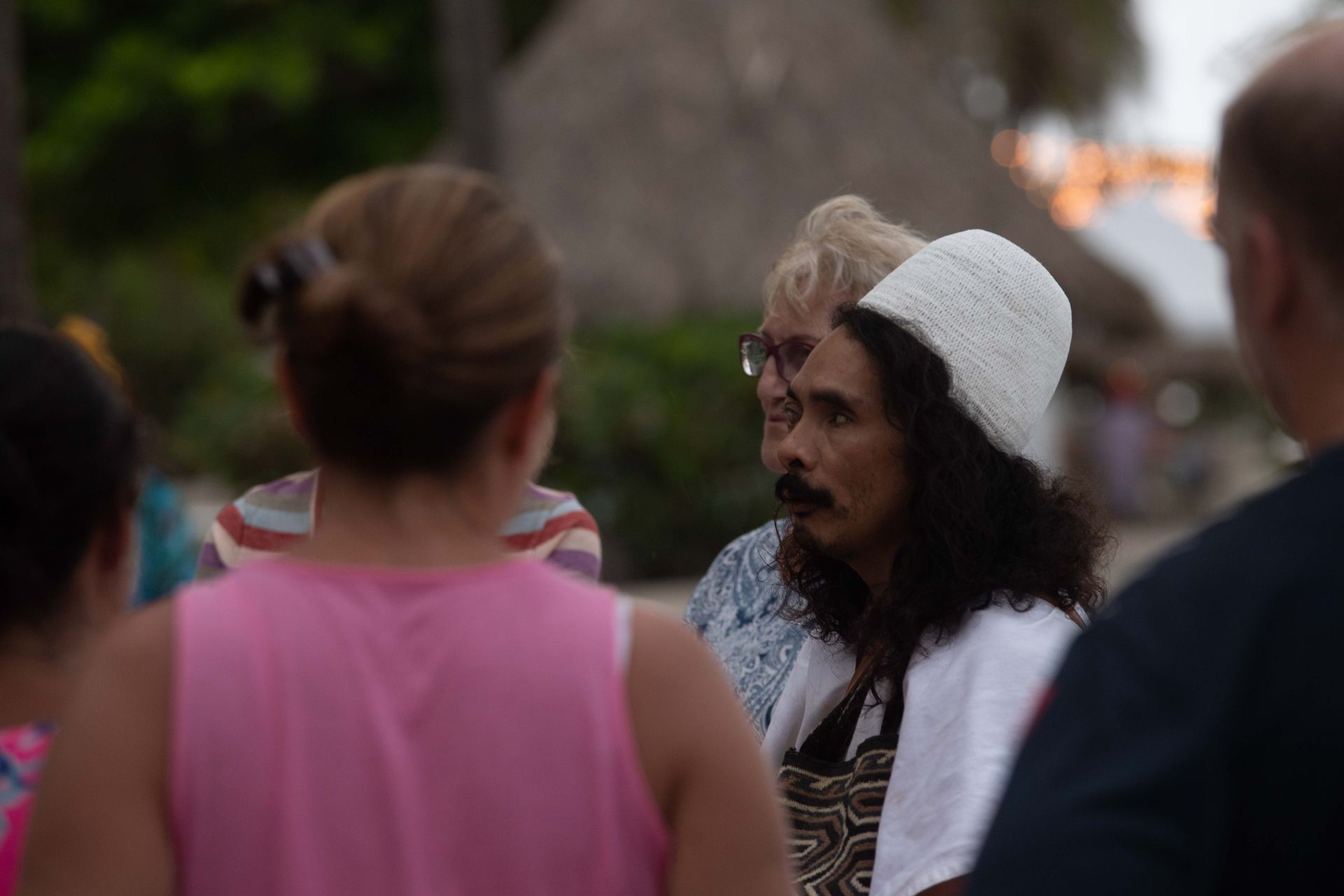
- Arhuacos: Known for their woven backpacks and distinctive white hats (tutusoma), they are the political and spiritual leaders of the mountains.
- Wiwas: They have a special connection with the element of water and are experts in the knowledge of medicinal plants.
- Kankuamos: Inhabitants of the southern slope, they are the bridge between the indigenous world and modern society, actively working to recover their language and customs.
For these groups, the world is a living organism. Every stone, every river, and every tree has a spirit whose permission must be sought before any action is taken. This philosophy is what makes the biodiversity in Palomino so vibrant; the land is not exploited, it is cared for.
What distinguishes the Wayuu people from the mountain peoples?
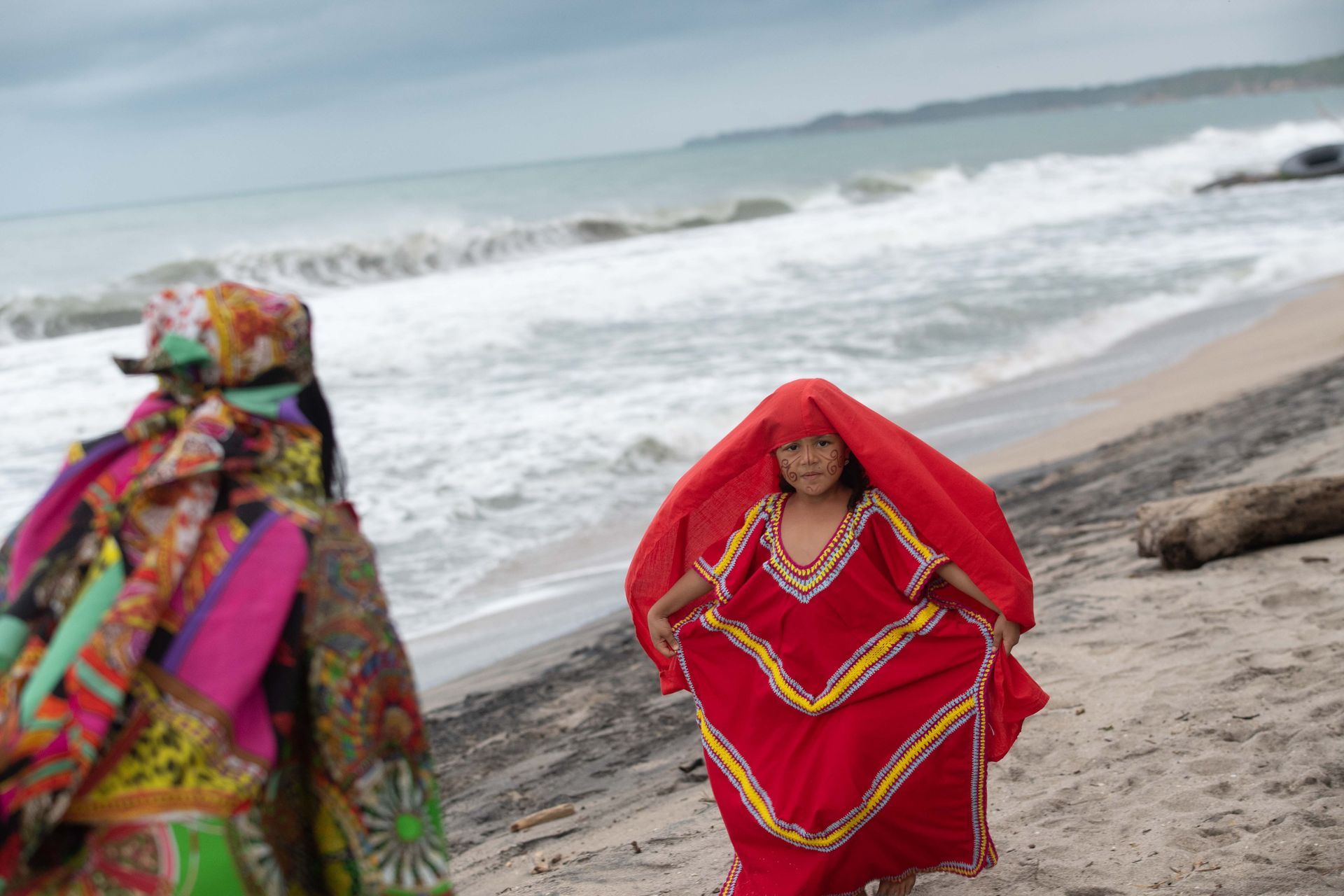
Unlike the communities of the Sierra Nevada de Santa Marta, the Wayuu people inhabit the semi-arid and desert regions of the middle and upper Guajira, although their influence extends throughout the department. They are the children of the earth and the wind, known for their resilience and their matrilineal social structure, where surnames and lineage are passed down through the women.
The Wayuu cosmogony is fascinating. For them, the dream world (Lapü) is as real as the physical world. Through dreams, ancestors send messages, warnings, and advice. This connection to the unseen is reflected in their crafts, especially in the famous Wayuu bags, whose designs (kanaas) represent elements of their environment, such as constellations or animal tracks in the sand.
The Wayuu presence in Palomino adds a different dimension. While the Sierra offers the whisper of the forests, the Wayuu bring the strength of the desert and the vibrant colors of their traditional blankets. This blend is what truly defines the indigenous cultures of La Guajira: the ability to coexist in landscapes as contrasting as snow and sand.
How does indigenous spirituality influence the well-being of the traveler?
Many visitors come to Palomino seeking healing or simply peace. It's no coincidence that this area is an epicenter for wellness and spiritual retreats. The energy of the Sierra Nevada, combined with the purity of the sea, creates an environment conducive to introspection. The wisdom of the indigenous cultures of La Guajira teaches us that rest is not only physical, but also a reconnection with our own center.
Walking along the trails that lead to the communities or participating in respectful cultural exchanges, the traveler begins to perceive the world differently. They learn that silence is not emptiness, but fullness, and that nature's time is very different from clock time. This is the essence of conscious luxury in Palomino: having the space and tranquility to listen to what the land has to say.
The importance of respectful cultural exchange
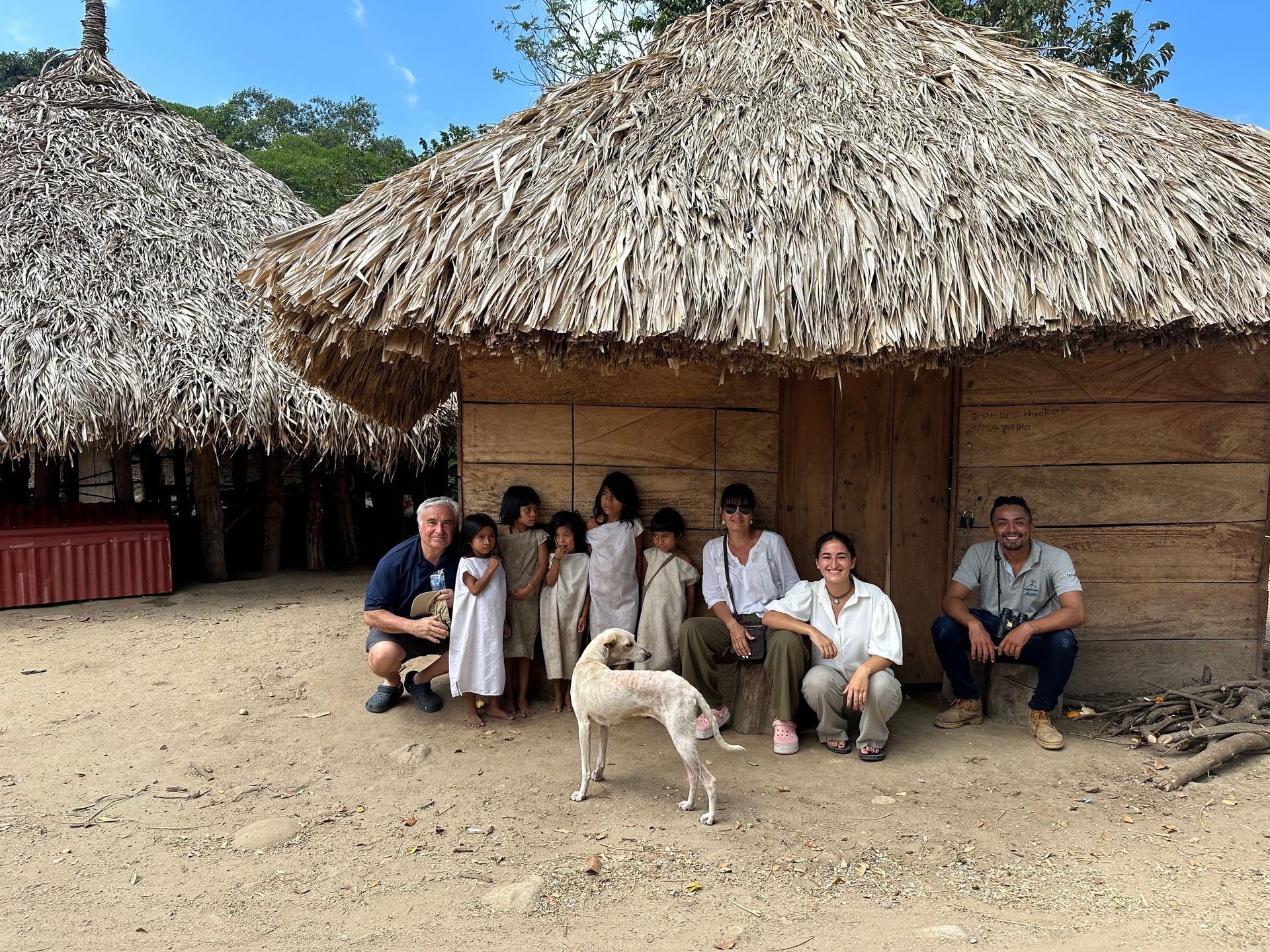
Visiting the lands of these communities is a privilege that comes with responsibilities. Tourism should not be an intrusion, but rather an exchange of knowledge. When interacting with local inhabitants, it is vital to remember certain basic principles to ensure that our presence is positive for both them and the ecosystem.
- Always ask for permission before taking photographs of people or sacred places.
- Avoid giving sweets or money to children, so as not to encourage begging.
- Buy handicrafts directly from the artisans, paying a fair price for their work.
- Respect the restricted access areas marked by the traditional authorities.
- Listen with openness and humility, without imposing our worldviews.
This approach of respect is what we promote in our experiences. We want everyone who comes to Aité to leave not just with a photo, but with an inner transformation based on an understanding of these ancient cultures.
What role does gastronomy play in cultural identity?
Food is another language through which the indigenous cultures of La Guajira express themselves. In the communities of the Sierra Nevada, staples such as corn, cacao, and traditional root vegetables like cassava, yam, and taro form the foundation of a diet deeply connected to the earth. In contrast, goat is an essential element of Wayuu tradition and cuisine, combined with artisanal fishing and unique preservation techniques adapted to the desert.
In Palomino, this rich heritage comes alive in every dish of our local gastronomy, where the freshness of the sea blends with the ancestral flavors of the mountain to create a culinary offering that nourishes both body and soul. Sampling a local dish is, at its heart, savoring the history of a land that has been generous to its people for generations.
A journey to the origin of life
The indigenous cultures of La Guajira represent one of the most important moral and spiritual reserves of the modern world. The Kogui, Arhuaco, Wiwa, Kankuamo, and Wayuu peoples do not merely inhabit a territory; they are the territory itself. Their presence in the Sierra Nevada and the desert constantly reminds us of our obligation to live in harmony with the natural environment.
Visiting Palomino and staying in a sustainable environment allows this legacy to continue flourishing. It's not just a tourist destination, but an exclusive retreat designed to reconnect you with what's essential. At Aité, we honor this respite which, in ancestral languages, means love and peace.
Summary of key points:
- The Sierra Nevada is home to four guardian villages with an ecological spiritual mission.
- The Wayuu people bring the wisdom of the desert and a unique matrilineal social structure.
- Palomino is the geographical and cultural meeting point of these two worldviews.
- Respectful tourism is fundamental to preserving the balance of the "Heart of the World".
- The travel experience is transformed into a path towards holistic well-being and conscious luxury.
If you're ready to experience this connection, we invite you to explore our adventure activities or simply enjoy the silence that only unspoiled nature can offer. La Guajira awaits you to show you that another way of life is possible.